
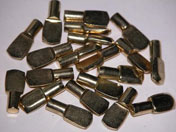
Metal Shelf Pegs
When installing shelves into a closet or in cabinetry, you usually come across shelf pegs. Shelf pegs are made of a variety of materials including plastic and metal. Metal shelf pegs are often found in designs for metal shelf frames but can also be used for applications around the house. Designs differ in appearance: some shelf pegs fit tightly into a cylindrical hole while providing a right angle and support for the shelf while others are cylindrical and soldered to the four posts of metal shelves. There are no substitutes for metal shelf pegs: if you have need of them, first ascertain which material you need. If you’re using the peg for a metal shelf stored outside, aluminum may fare better than steel.
Aluminum Shelf Pegs
Aluminum is a lightweight metal that doesn’t rust; therefore, it has been popular with the military for a long time. Aluminum isn’t the hardest of metals but it is popular in use in the construction of simple, office shelving. So long as heavy loads aren’t stacked on top of the shelving, the aluminum metal shelf pegs should hold up well. Aluminum is also a poor conductor so if you’re concerned about the possibility of attracting lightning, aluminum would be your metal of choice.
Die-cast Steel Pegs
For indoor use, steel has been a phenomenal development in metallurgy. Extremely durable pieces can be made that are resistant to great amounts of force. Galvanization allows for extended life in the presence of humidity. Many of the major motors we use today are made of die-cast steel. If you’ll be putting a lot of weight upon shelving, your best bet is to get steel shelves. Metal shelf pegs will usually be the same material as the shelving itself. Pegs made in die-cast steel will usually be welded in place to the shelf piece. If you’re assembling a steel shelf and you want to be sure that the shelf is sturdy, there’s nothing like a solid bond between two plates that will hold heavy equipment and appliances.
Fastening Pegs/ Structural Pegs
Around the house there are an abundance of structural pegs and fastening pegs used throughout – some specifically for shelving. Fastening pegs can be found on:
- curtain rods
- bath shower curtains
- wooden furniture
- DIY wood flooring
When used in shelving, fastening pegs are usually used as bookmarkers or dividers. Bookends are usually not secured into metal peg board; these adornments are usually just heavy.
Structural pegs that exist in houses usually only do so if the house was built hundreds of years ago: the practice of nail-less carpentry is almost a lost art these days. In the early settling times of America, nails were expensive and carpenters got good at using wood peg connectors to fasten large structural beams. Using slots in the wood that fit custom made pegs, it was possible to erect an entire house frame using connective slot work rather than use nails. Pegs would often be hammered in place to secure the frame’s joints.